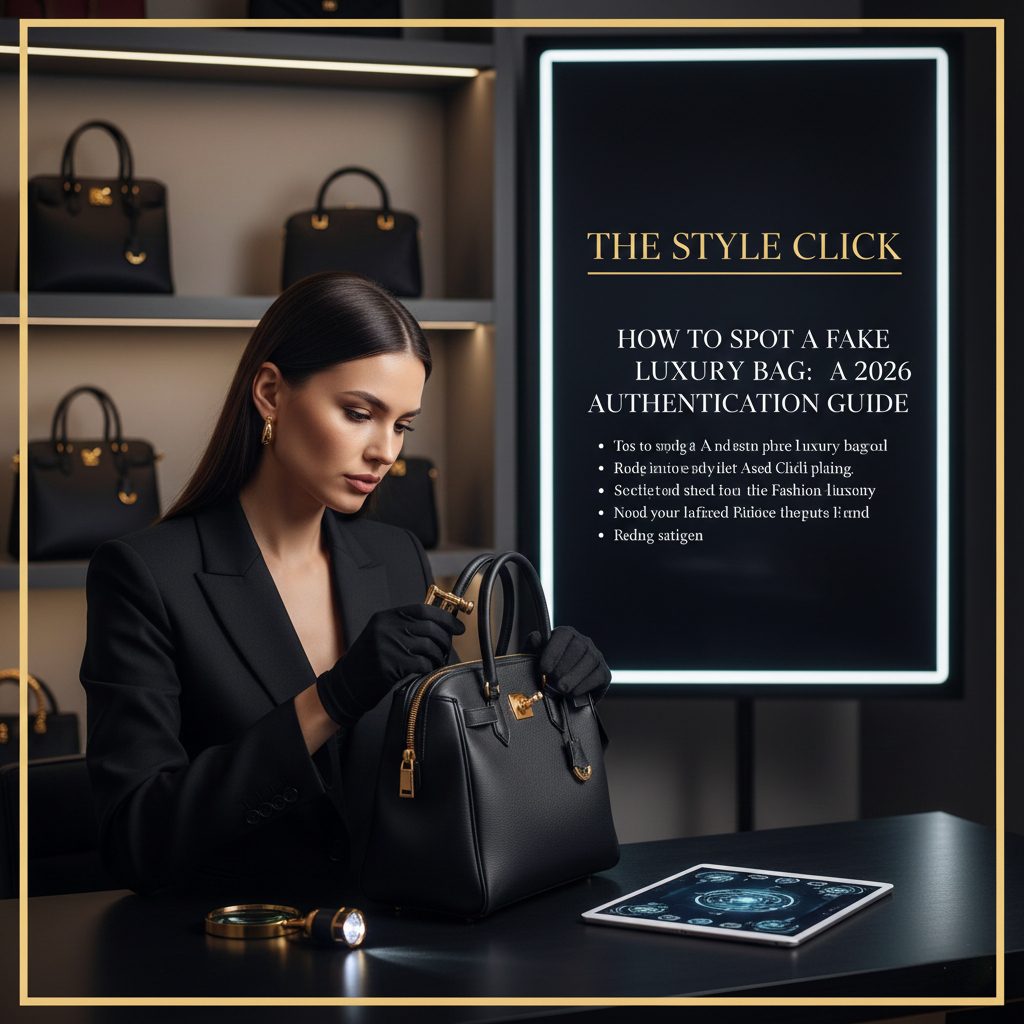
In the booming resale market of 2026, the “Super Fake” industry has hit a terrifying level of precision. Gone are the days when a counterfeit bag was easy to spot with a misspelled logo or cheap, plastic-feeling leather. Today’s high-end replicas are crafted with such uncanny accuracy that even seasoned collectors and professional buyers are being fooled. In this ultimate guide, we will teach you exactly how to spot fake luxury bags so you can shop with complete peace of mind.
Whether you are hunting for a vintage treasure on a resale platform, browsing eBay, or visiting a boutique, knowing how to authenticate a bag isn’t just a skill—it’s your financial safety net. At The Style Click, we believe that your hard-earned money should only go toward the real deal. In this guide, we are peeling back the layers on how to spot a fake and ensure your investment is 100% authentic.
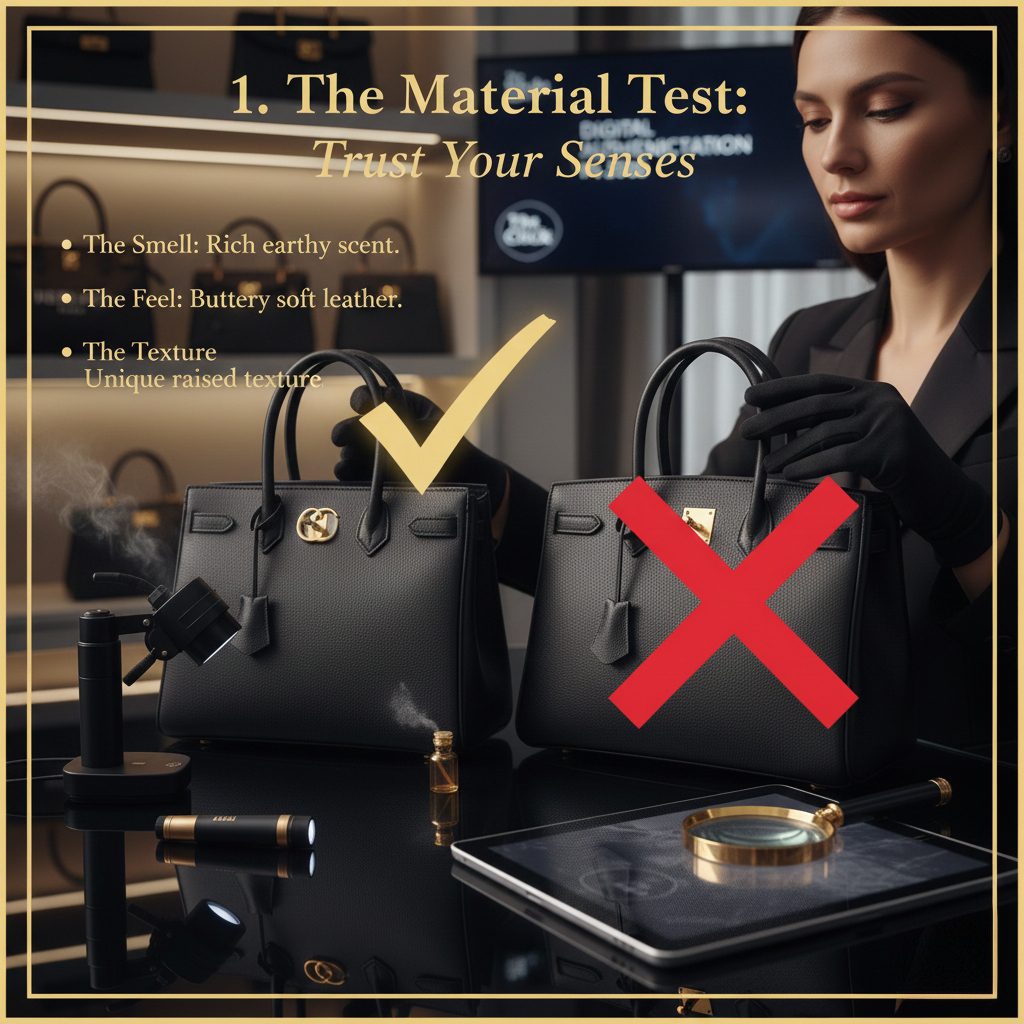
1. The Material Test: Trust Your Senses
Luxury houses like Hermès, Chanel, and Louis Vuitton don’t just pick leather from a pile; they source from the world’s finest tanneries. If something feels “off,” your intuition is usually right.
The Smell: Real, high-end leather has a distinct, earthy, organic scent. If you open a bag and are hit with the sharp, acidic smell of industrial chemicals, glue, or synthetic plastic, that is your first major red flag.
The Feel: Authentic leather—especially Chanel’s signature Lambskin—is buttery soft and supple. It should feel warm to the touch. Counterfeits often feel stiff, rubbery, or overly “perfect” in a way that suggests synthetic coating.
The Texture: Take Louis Vuitton’s coated canvas, for example. The authentic material has a specific, slightly raised grain. Fakes often look too smooth, “printed-on,” or glossy, lacking that depth and texture that only genuine artisan-crafted items possess.
Related Style Guide: Not sure how to care for your genuine leather pieces once you’ve authenticated them? Check out our complete guide: “Luxury Leather Care“
2. Stitching: The Mark of Perfection
Luxury brands pay their artisans a premium for precision. In a fake factory, time is money, and they simply cannot replicate the human touch.
- Consistency is Everything: Authentic luxury bags feature perfectly even, slightly slanted stitches. If you see a machine-stitched bag with perfectly straight, horizontal lines, it was likely mass-produced.
- The “No-Mistake” Rule: A brand like Dior, Prada, or Gucci would never let a bag leave the factory with a loose thread, a snag, or a double-stitch in the middle of a seam. Examine the transition points—where the handles meet the body, for instance. If the stitching looks haphazard, it’s not luxury; it’s a replica.
- Thread Color: The thread used on an authentic bag is dyed to perfectly match or complement the specific color palette of the leather. Fakes often use “close enough” shades that look slightly off when held under natural light.
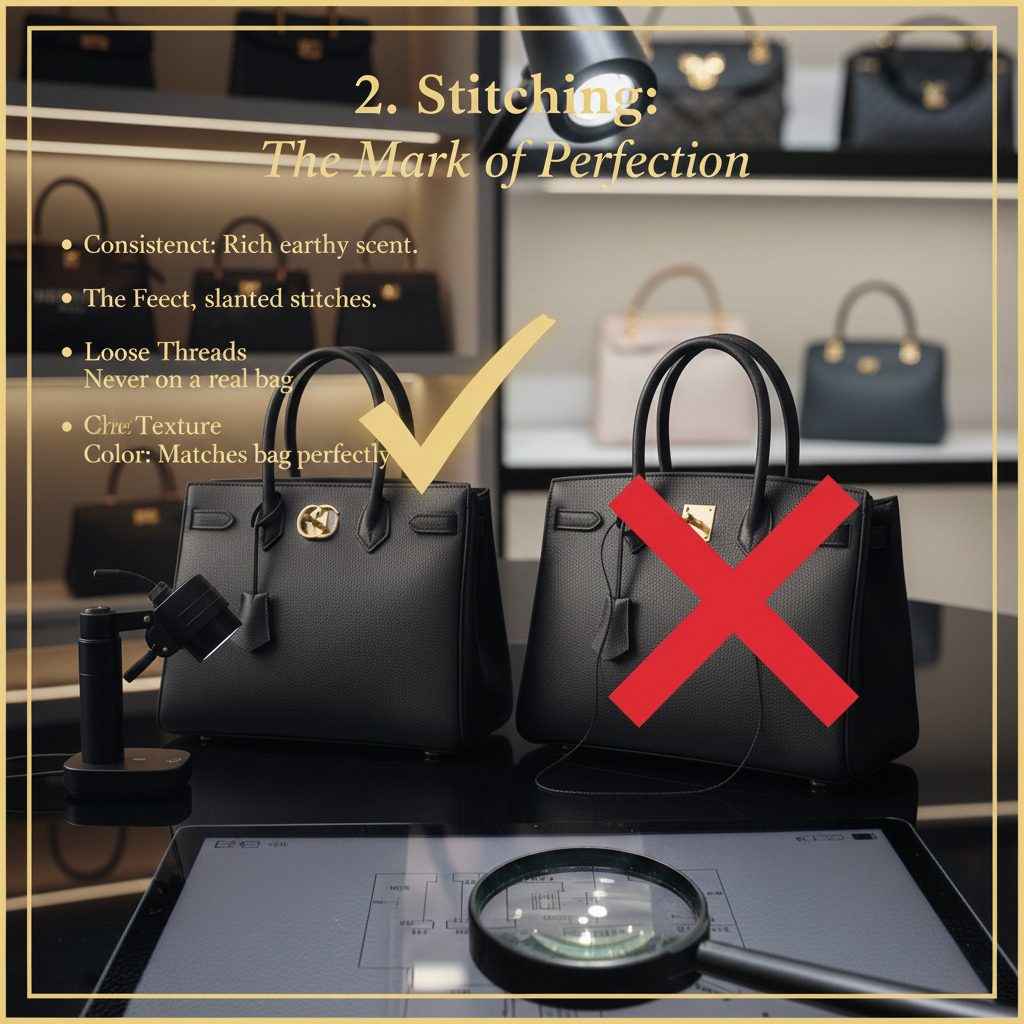
3. Hardware & Zippers: The Weight of Quality
Counterfeiters almost always try to save money on the “hidden” details—the hardware.
- The Weight Test: Real gold or silver-plated hardware feels heavy, solid, and cold. If the hardware feels light, “tinny,” or like hollow aluminum, you are likely holding a fake.
- The Zip Test: Luxury zippers (usually by world-class manufacturers like YKK, RiRi, or Lampo) should glide like butter. If you have to struggle to pull the zipper, if it snags, or if you see “gold paint” flaking off the teeth, walk away immediately.
- Engravings: Look at the hardware engravings on zipper pulls or studs. On an authentic piece, the engraving is deep, crisp, and clean—the letters are sharp. On a fake, the letters are often shallow, blurry, or unevenly spaced.
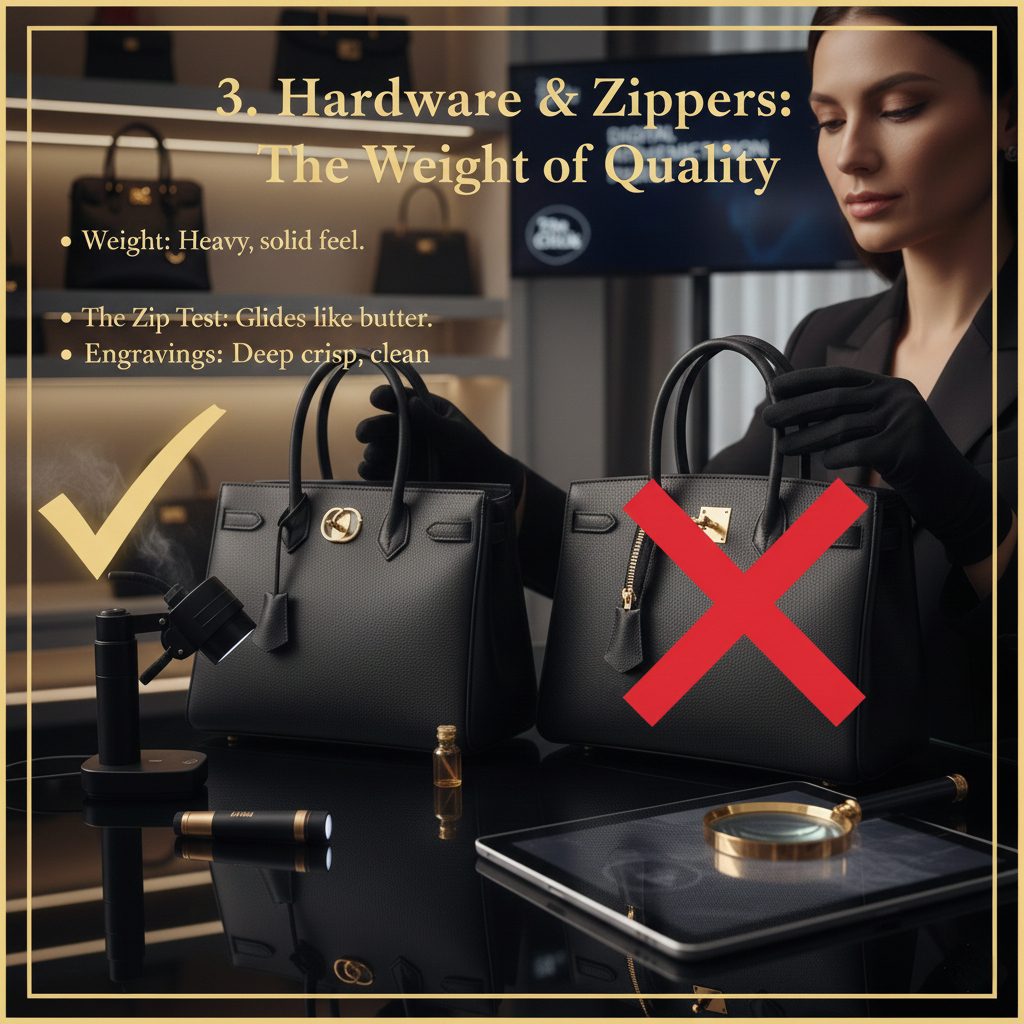
4. Logos and Typography
Typography is a science in the luxury world. Counterfeiters often struggle with “kerning”—the spacing between letters.
- The “O” Test: This is a classic trick. In many authentic luxury logos, such as Chanel or Louis Vuitton, the “O” is perfectly round. Counterfeits often use an oval-shaped “O” because it’s cheaper to use a standard font file.
- The Stamping: Check the “Made in France” or “Made in Italy” heat stamp. On an authentic bag, this is embossed cleanly into the leather. If the gold or silver leaf is “bleeding” outside the lines of the letters, or if the stamp looks crooked or pressed too deeply, don’t trust it.
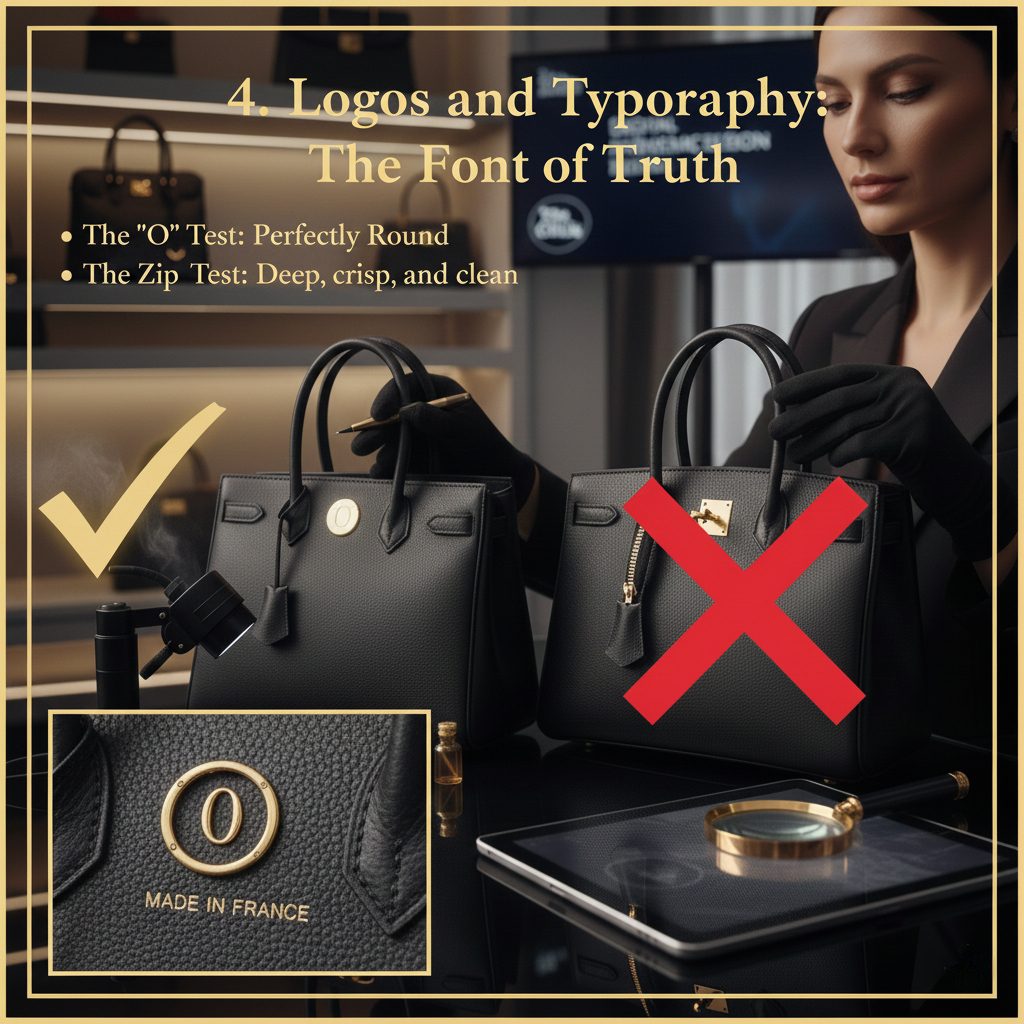
5. Date Codes and Serial Numbers
As technology evolves, so does authentication.
- The Evolution: In 2026, many major houses like Chanel and Louis Vuitton have moved away from physical paper stickers and moved toward RFID Microchips embedded inside the lining. Always verify if the model you are buying should have a chip.
- The Logic Check: If a bag has a serial number, look up the specific year and factory code. Does it make sense? If a bag is labeled “Made in 2026,” but the serial number format hasn’t been used since 2010, it’s a fake.
6. Packaging and Provenance
People often focus on the bag and forget the extras.
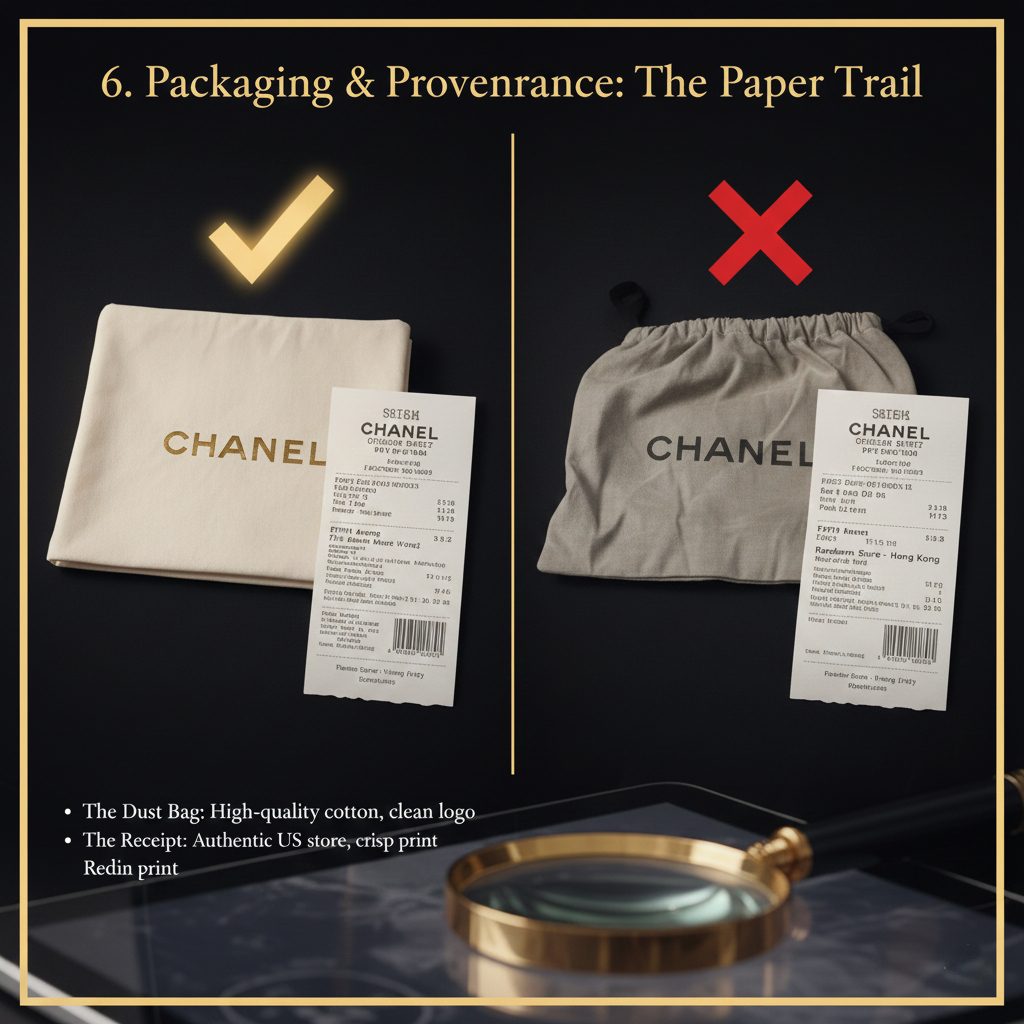
- The Dust Bag: Authentic dust bags are made of high-quality, dense cotton with a crisp, clear logo. Fakes often use thin, scratchy, synthetic material with a blurry print.
- The Receipt: Be extremely careful here—counterfeiters now forge receipts too! A “Chanel” receipt from a random store in Hong Kong that doesn’t match the model number is a common red flag we see in the US market. Always insist on seeing the original purchase history from a reputable source.
7. Digital Authentication in 2026
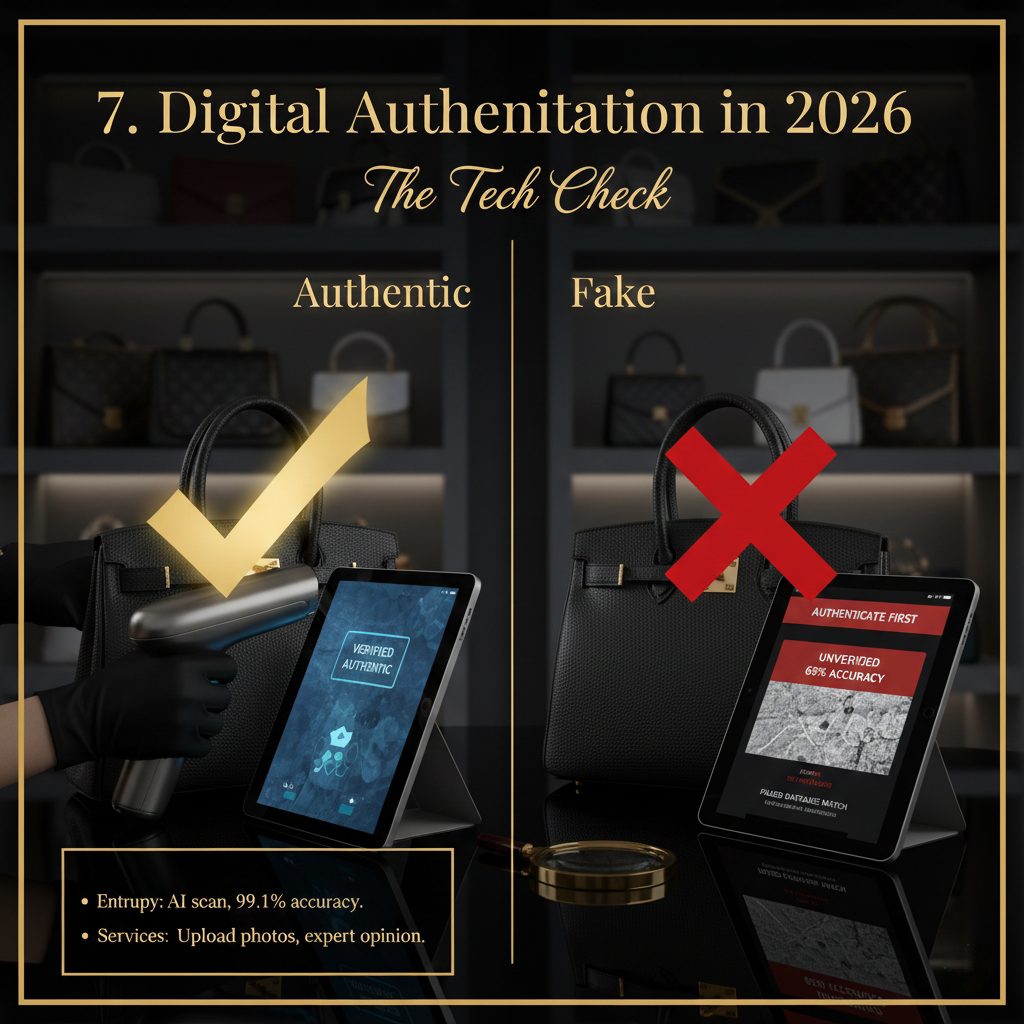
If you are still unsure, don’t guess. Use the tools available to us in 2026.
- Entrupy: Many professional resellers use this AI-powered device to scan the microscopic texture of a bag. It has an accuracy rate of 99.1%. If a seller offers an Entrupy certificate, you’re in much safer hands.
- Professional Apps: Apps like Real Authentication or Authenticate First allow you to upload high-definition photos of the stitching, hardware, and date codes to get an expert’s opinion within hours for a small fee. It’s a tiny price to pay for peace of mind.
We Want Your Opinion!
We’ve all been there—tempted by a “too good to be true” deal.
- Have you ever accidentally bought a fake, or did you manage to spot the red flags in time?
- What’s the one brand you find the hardest to authenticate?
Drop a comment below! We love hearing your stories and your tips on how you keep your luxury collection authentic.
Final Thoughts: The Joy of the Real Deal
Buying a luxury bag is a milestone—a celebration of your hard work. Nothing ruins that experience like finding out your “investment” is a fake. Always remember: If the deal seems too good to be true, it probably is.
At The Style Click, we advocate for conscious, safe, and authentic luxury shopping. By paying attention to the small details—the stitching, the weight of the hardware, and the quality of the leather—you can build a collection that stands the test of time.
Ready to build your collection?
Before you shop, check out our latest curated “Authenticated Resale List” at The Style Click, where we showcase pre-loved pieces from verified sellers.